
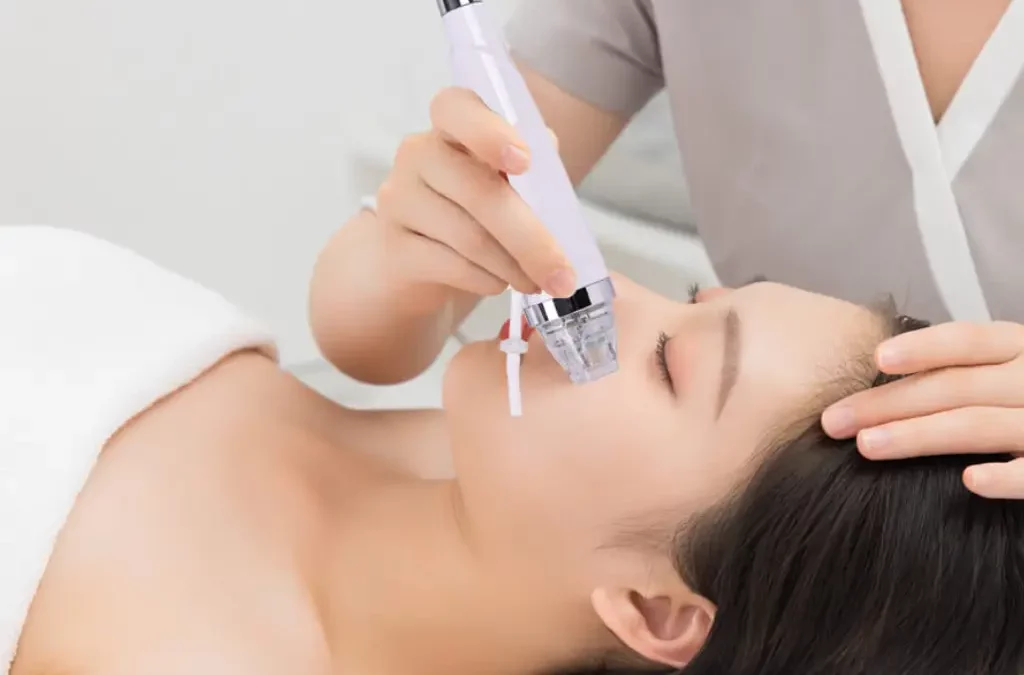
Over time, skin naturally changes. It can gradually lose firmness, become less supple, and develop a more uneven texture. Fine lines, sagging skin, and certain textural imperfections may then become more visible.
Aesthetic radiofrequency is one of the techniques used to care for the skin and improve its appearance. This treatment relies on the use of radiofrequency waves that produce controlled heat in the skin tissues. But how does this technology actually work? What are its effects on skin firmness and texture? And what should you expect during a session? Here’s what you need to know.
What is aesthetic radiofrequency?
Radiofrequency is a technology that uses electromagnetic waves to produce controlled heat in certain layers of the skin.
The goal is to stimulate the skin’s natural mechanisms while improving its overall appearance. The heat generated by the device can help stimulate collagen and elastin fibers.
Radiofrequency treatment is primarily sought to improve the appearance of skin that lacks firmness or whose texture appears less uniform.
Depending on the technology used and the area concerned, radiofrequency can be offered for different parts of the face and sometimes the body.
How does radiofrequency affect the skin?
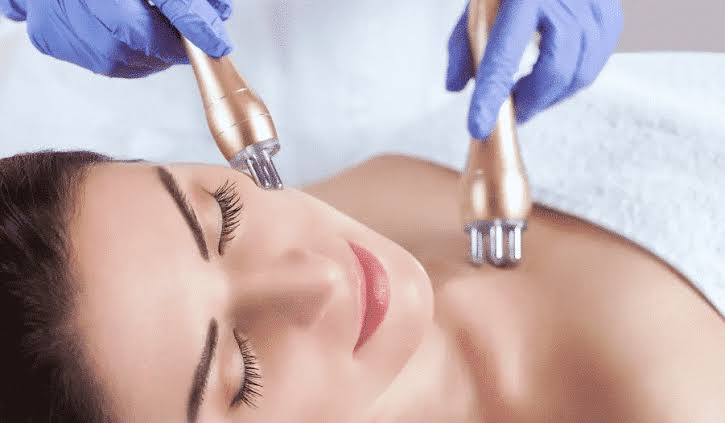
The principle of radiofrequency is based on the diffusion of energy into targeted tissues. This energy creates controlled heat that can reach certain layers of the skin.
This heat can cause a temporary contraction of certain fibers and, above all, gradually stimulate the natural processes associated with collagen production.
Radiofrequency skin treatment therefore does not only aim to produce an immediate effect. Its value also lies in the gradual changes that can appear when the skin is stimulated over the course of several sessions.
However, the result depends on many factors, including age, skin quality, the area treated, and the protocol used.
Radiofrequency and collagen stimulation
Collagen is a protein essential to the structure of the skin. It contributes in particular to its support, firmness and overall appearance.
With age, the body’s natural collagen production gradually decreases. This change can contribute to the appearance of wrinkles and loss of firmness.
Radiofrequency and collagen stimulation are therefore often combined in aesthetic treatments aimed at improving skin firmness.
The controlled heat generated by radiofrequency can stimulate fibroblasts, the cells involved in collagen production. Because the process is gradual, changes may appear over the course of several sessions.
What are the effects on skin firmness?
One of the main objectives of radiofrequency is to improve the appearance of skin that appears less toned.
Radiofrequency skin tightening can be considered for certain areas with mild to moderate sagging.
On the face, the treatment may include:
- The cheeks
- The oval of the face
- The lower part of the face
- The chin
- The neck
Radiofrequency does not alter the deep structures of the face like surgery. It works primarily by stimulating targeted tissues to gradually improve their appearance.
Does radiofrequency improve skin texture?
Firmness is not the only objective. Radiofrequency can also be used in protocols aimed at improving the overall appearance of skin texture.
Skin that appears more even and toned can give a more uniform appearance to the face.
Radiofrequency treatment for skin texture can therefore be integrated into an aesthetic routine designed to improve the overall appearance of the skin.
However, it’s important to understand that radiofrequency doesn’t treat all skin imperfections in the same way. A consultation allows us to identify your specific skin needs and determine if this technology is appropriate.
Radiofrequency for wrinkles and fine lines
Wrinkles and fine lines appear gradually with the natural aging of the skin. The decrease in collagen and elasticity can contribute to their visibility.
Radiofrequency can be used in certain protocols to improve the appearance of wrinkles and fine lines by radiofrequency .
Thermal stimulation can promote natural processes associated with collagen and contribute to skin that appears firmer and smoother.
However, the results are not the same for everyone. The number of sessions and the effects observed depend in particular on the initial condition of the skin.
How does a radiofrequency session work?
A session typically begins with an assessment of the skin and the area to be treated. The professional can then cleanse and prepare the skin.
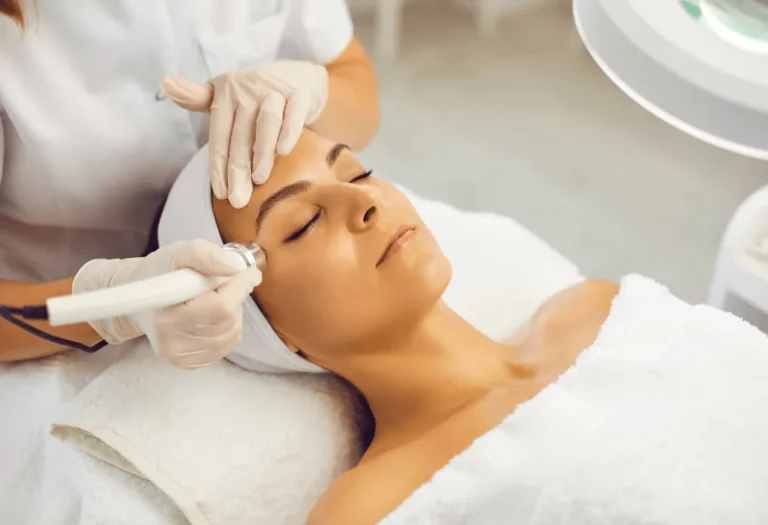
The radio frequency device is applied to the selected area. Energy is delivered gradually to produce controlled heat.
During the treatment, the person may experience a comfortable sensation of warmth. The intensity should be adjusted according to the area being treated and the skin’s sensitivity.
The duration of the session varies depending on the area treated and the technology used.
After the treatment, the skin may feel slightly warm or show temporary redness. The professional will provide recommendations tailored to the situation.
Which areas can be treated?
Radiofrequency is primarily known for facial treatments, but it can also be used in certain protocols on different areas of the body.
For the face, frequently targeted areas may include:
- The front
- The cheeks
- The contours of the face
- The lower part of the face
- The chin
- The neck
Radiofrequency facial treatment can therefore be adapted according to the needs and objectives of each person.
A personalized assessment remains important before starting a protocol.
How many sessions are needed?
The number of sessions depends on several factors. It can vary depending on the condition of the skin, the area treated, the technology used and the desired objectives.
Some people may undergo several sessions spaced out over time to promote progressive stimulation of the skin.
Therefore, there is no universal number of sessions suitable for everyone.
During a consultation, the professional can propose a personalized protocol based on the appearance of the skin and the desired results.
What results can we expect?
The results of radiofrequency can be gradual. Some people may experience firmer skin after a session, while the effects related to collagen stimulation may take longer to appear.
The radiofrequency result on firmness can notably be translated into skin that appears firmer, more supple and more even.
Results may also depend on lifestyle and daily skincare used to maintain good skin quality.
It is important to maintain realistic expectations and understand that radiofrequency cannot stop natural aging.
What are the advantages of aesthetic radiofrequency?
Radiofrequency is often chosen for its non-surgical approach and its use in various treatment protocols.
Possible objectives include:
- Improve the appearance of firmness
- Stimulating natural collagen-related mechanisms
- Improve the appearance of skin texture
- To visually soften certain fine lines
- Work on certain areas showing slight sagging
- Offering a non-surgical aesthetic approach
However, the benefits may vary from person to person.
Radiofrequency or other aesthetic treatments?
Today, various technologies exist to improve the appearance of the skin. Radiofrequency does not necessarily address the same needs as peels, lasers, ultrasound, or other aesthetic techniques.
The choice of a treatment should depend on the condition of the skin and the desired objective.
For example, a person primarily wishing to improve firmness may have different needs than a person seeking to treat pigmentation or surface imperfections.
An aesthetic radiofrequency consultation allows these objectives to be discussed and for it to be determined whether the treatment corresponds to the identified need.
Why consult a professional?
Even though radiofrequency is a non-surgical technique, it must be performed with suitable equipment and according to an appropriate protocol.
A consultation allows for the evaluation of the skin and the verification of any contraindications or special precautions.
The professional can also explain how the technology works, the reasonably expected results, and the number of sessions that can be considered.
This personalized approach avoids considering radiofrequency as an identical treatment for all people.
Conclusion
Aesthetic radiofrequency uses controlled energy to heat certain layers of the skin and stimulate natural mechanisms associated with collagen.
Its aim may be to gradually improve the appearance of firmness, texture, and certain fine lines. The treatment is non-surgical and can be adapted to different areas of the face as needed.
However, results vary from person to person. A consultation with a qualified professional remains essential to determine if radiofrequency is suitable for your skin and aesthetic goals.
For more updates and details, visit our Facebook page!
FAQ
Is radiofrequency painful?
Radiofrequency treatment generally produces a sensation of heat during the session. The intensity felt can vary depending on the technology, the area treated, and each person’s sensitivity.
Is radiofrequency suitable for mature skin?
It can be offered to people wishing to improve the appearance of skin that has lost firmness. However, a personalized assessment is necessary.
When will we see the results?
Results may be gradual. The effects related to collagen stimulation may appear over time and evolve during the course of the protocol.
How many sessions should be planned?
The number of sessions depends on the skin condition, the area being treated, and the desired outcome. The practitioner can develop a personalized treatment plan after a consultation.
Can you resume your activities after a session?
Since radiofrequency is a non-surgical treatment, resuming normal activities is generally possible, depending on the protocol used and the professional’s recommendations.
Can radiofrequency treat wrinkles?
It can be used in certain protocols aimed at improving the appearance of wrinkles and fine lines, particularly through the stimulation of the skin’s natural mechanisms.